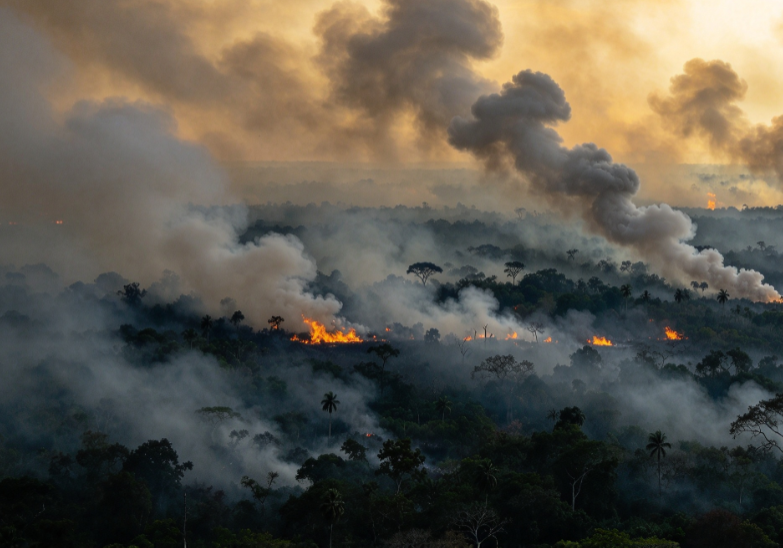
Forest fires in the southern Amazon rainforest continue to intensify during the dry season, with hundreds of new hotspots emerging. Most of the fires are caused by human-induced burning to clear land for agriculture and livestock farming. The burning forests release large amounts of PM2.5, carbon monoxide, and organic aerosols, forming thick, grayish-yellow smoke plumes. Carried by prevailing winds, these plumes drift across regional borders into neighboring countries such as Bolivia and Paraguay, causing transboundary air pollution.
Leave a Reply