-
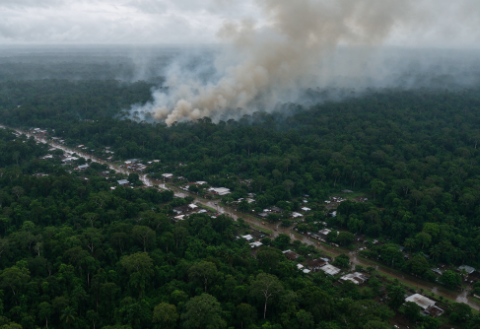
Showers in Amazonas State Have Temporarily Cleared the Haze, but 42 Cities Remain Under a State of Emergency Due to Rainforest Fires
In the early hours of October 15, brief showers fell in the Brazilian state of Amazonas, temporarily dispersing the thick smoke from forest fires hanging over the state capital, Manaus. However, the drought across the state has not abated, with numerous fires still burning, and 42 towns remain under a state of environmental emergency.
-
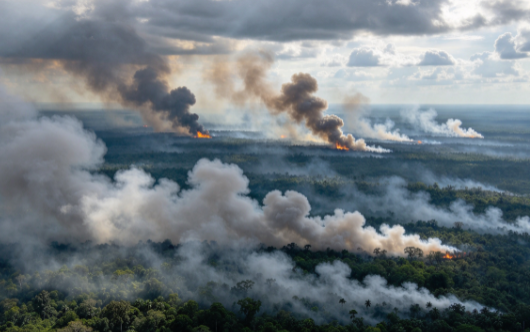
Ozone Pollution from Amazon Wildfires Damages Vegetation
The University of Exeter in the United Kingdom has released a study showing that ongoing forest fires in the Amazon are emitting large amounts of ozone pollutants. Ozone adheres to the leaves of rainforest vegetation, damaging the plants’ photosynthetic tissues; as a result of ozone pollution, the carbon sequestration efficiency of rainforest trees has significantly…
-
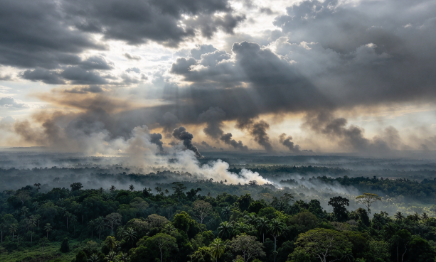
Amazon Rainforest Fires Cause Ozone Pollution and Damage to the Rainforest
On October 7, a research team from the University of Exeter in the United Kingdom released a study indicating that pollutants emitted by Amazon rainforest fires undergo photochemical reactions to form ground-level ozone, which damages leaves and inhibits photosynthesis. This reduces the rainforest’s carbon absorption by an amount equivalent to 24 percent of the carbon…
-
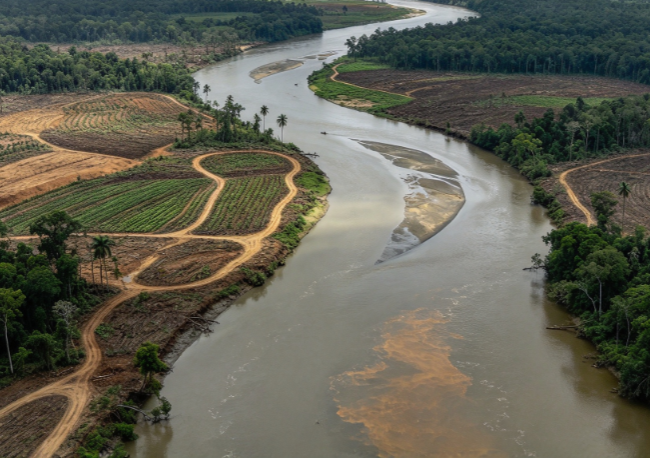
Illegal Cultivation in the Amazon and the Misuse of Highly Toxic Pesticides
In illegal cultivation areas in the southern Amazon, highly toxic herbicides and insecticides—such as glyphosate and butylthiocarbamate—are used extensively. Unregulated pesticides are sprayed onto the rainforest surface; after seeping into the soil, they are carried by rainwater into Amazon tributaries. Pesticide residue levels in the water and sediment exceed safety standards by dozens of times,…
-
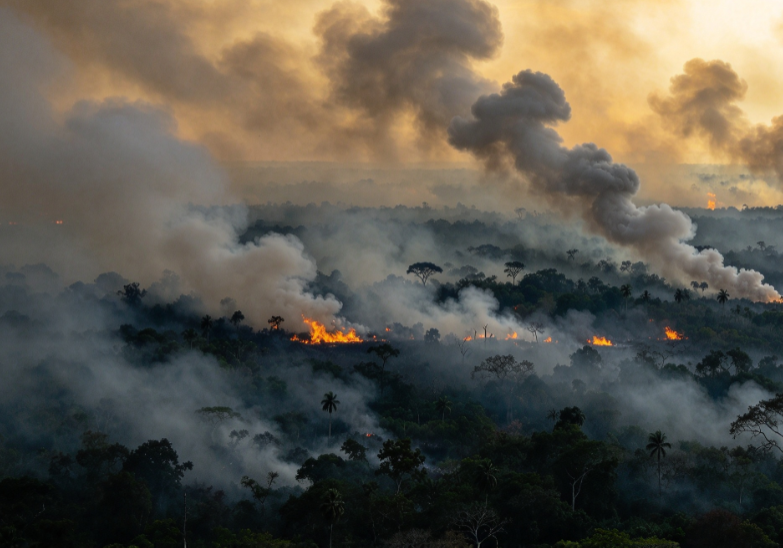
Amazon Rainforest Fires Escalate During Dry Season
Forest fires in the southern Amazon rainforest continue to intensify during the dry season, with hundreds of new hotspots emerging. Most of the fires are caused by human-induced burning to clear land for agriculture and livestock farming. The burning forests release large amounts of PM2.5, carbon monoxide, and organic aerosols, forming thick, grayish-yellow smoke plumes.…
-
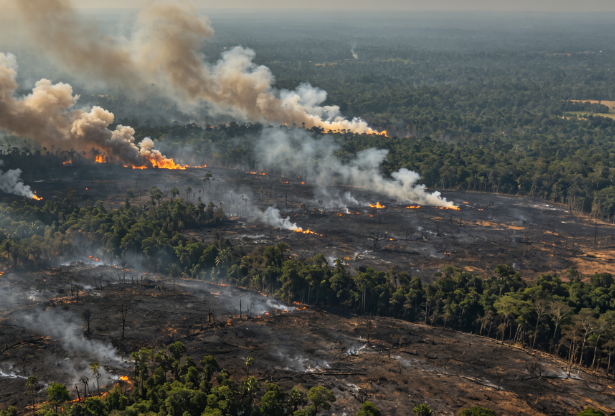
Wildfires Surge During the Amazon’s Dry Season
This month, 1,445 forest fire hotspots have been detected in the state of Amazonas, a 407% increase from the 285 recorded in early August. The fires are concentrated in the southern regions of Apui and Novo Aripuã, where a combined total of 746 hotspots—more than half of the state’s total—have been recorded. The Amazon is…
-

Oil Pipeline Leak in the Amazon Rainforest
A major crude oil spill occurred in the Ecuadorian Amazon Rainforest when an oil pipeline operated by OCP Oil Company ruptured, causing approximately 6,300 barrels of crude oil to flood into a pristine nature reserve along the Coca River. The spilled crude oil quickly covered the riverbed, riverbanks, and riparian vegetation, forming a vast black…
-

Noise Pollution Alert for Oil and Gas Seismic Exploration at the Amazon River Estuary in Brazil
Petrobras has intensified high-frequency airgun seismic exploration at the Amazon River estuary, with sound levels reaching up to 230 decibels and explosions occurring every 10 seconds. This extreme underwater noise directly disrupts the communication, foraging, and reproduction of pink river dolphins and offshore cetaceans, causing marine mammals to lose their way and become stranded and…
-

Wastewater from Illegal Mining in Peru Flows Across the Border into the Brazilian Amazon
The Amazon Monitoring Project (MAAP) has released real-time satellite monitoring results showing that illegal mining activities in Peru’s Madre de Dios Region are causing severe cross-border pollution. Local illegal gold and manganese mining operations have caused mining slurry and wastewater rich in heavy metals such as lead and cadmium to flow continuously along the border…
-

Amazon Dry Season Significantly Lengthening
The dry season in the Brazilian Amazon is lengthening from four months to six months, with precipitation during the critical period decreasing by more than 150 millimeters; the 2023–2024 drought led to a 9% increase in the area affected by fires and a 19% rise in forest degradation alerts, with approximately 4.2 million hectares of…